
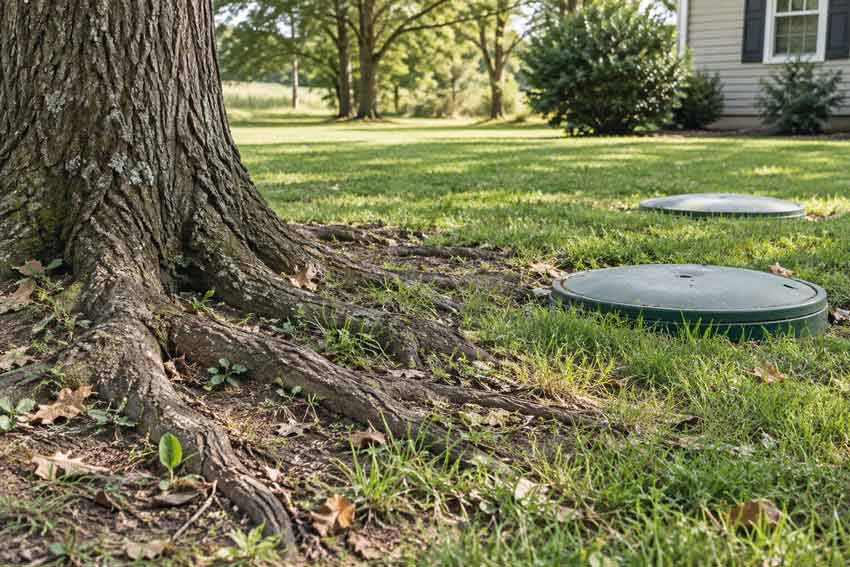
Trees add shade and beauty to your property, but when they’re planted too close to a septic system, their roots can eventually create problems underground.
Tree and shrub roots naturally grow toward areas where they can find water and nutrients. Unfortunately, septic tanks, pipes, and drain fields can provide exactly what they’re looking for.
A little planning — and knowing what warning signs to watch for — can help protect your septic system from costly root damage.
Why are tree roots attracted to septic systems?
A properly functioning septic system moves wastewater from your home into the septic tank and eventually into the drain field, where it is absorbed into the soil.
That creates an underground environment with moisture and nutrients that can attract growing roots.
Roots generally can’t break through a sound, properly sealed pipe or septic tank on their own. But if there is already a small crack, loose connection, damaged seal, or other opening, roots may find their way inside.
Once they do, they can continue growing and make the problem worse.
What kind of damage can roots cause?
Root intrusion can affect several parts of a septic system.
Roots that enter a pipe can restrict the flow of wastewater and eventually contribute to slow drains, clogs, or backups inside the home.
Roots growing around the septic tank may also interfere with pipes, lids, or other components. In the drain field, extensive root growth can affect the soil and the system’s ability to properly distribute wastewater.
The longer a root problem goes unnoticed, the more difficult — and potentially expensive — it may become to correct.
Watch for warning signs
Root problems don’t always produce an obvious warning right away. Some of the symptoms can look like other septic or plumbing problems.
Things to watch for include:
- Slow-moving drains throughout the home
- Gurgling sounds from plumbing fixtures
- Frequent drain or sewer line clogs
- Sewage odors indoors or outside
- Wet or unusually green areas around the septic system
- Sewage backing up into the home
If you notice several of these signs together, it’s a good idea to have the system checked rather than assuming it’s simply a clogged drain.
Be careful what you plant near your septic system
One of the easiest ways to prevent root problems is to think about your septic system before planting trees or large shrubs.
Grass and other shallow-rooted plants are generally better choices directly over a drain field. Trees and larger landscaping should be kept farther away so their root systems have room to grow without interfering with septic components.
It’s also important to know where your septic tank, lines, and drain field are located before adding new landscaping.
Protect the system before there’s a problem
You don’t necessarily need to remove every tree near your septic system. The important thing is to be aware of where your system is located, watch for signs of trouble, and address problems early.
Regular septic pumping and maintenance also provide an opportunity to identify developing issues before they turn into backups or major repairs.
If you’re concerned about tree roots or other problems with your septic system, Little’s Septic Service can inspect your system, identify potential trouble, and help keep everything working the way it should.